
What Happens on a Whale-Watching Helicopter Flight?
Your experience begins with a flight briefing before departure.
Once airborne, the route takes you towards the Cape Whale Coast, where the landscape shifts from mountains and farmland to cliffs, beaches and open ocean.
The exact route may vary according to weather, aircraft, operational requirements and current conditions.
Because whales are wild animals moving freely through the ocean, sightings can never be guaranteed. That unpredictability is part of the experience.
When Is Whale Season?
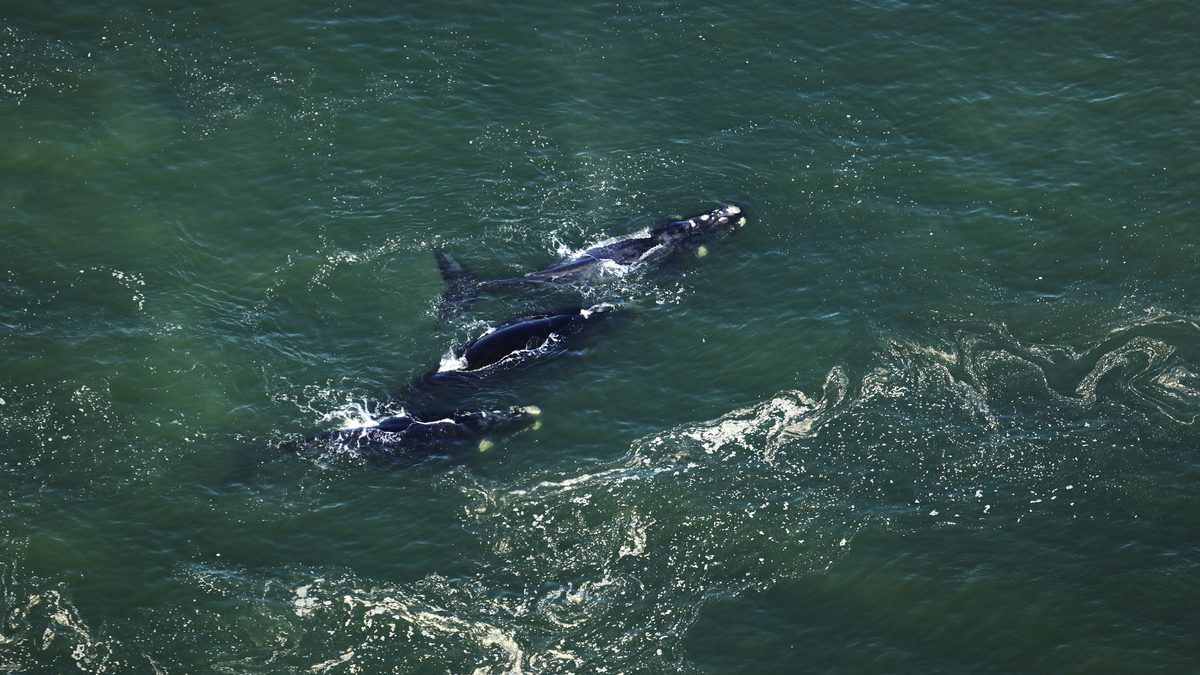
Southern Right whales are generally present along the Cape Whale Coast from June through November as they migrate into warmer coastal waters to mate and calve.
Different stages of the season can offer different experiences, with sightings varying from week to week and year to year.
Why Choose a Helicopter?
The aerial viewpoint allows you to take in far more than the whales themselves.
Walker Bay, Hermanus, De Kelders and Gansbaai form part of a coastline defined by mountains, cliffs and wide stretches of ocean.
From a helicopter, these elements come together into one remarkable landscape.
What Should You Bring?
Comfortable clothing and a camera or phone are usually all you need.
The Moya Aviation team will provide any additional information relevant to your flight beforehand.
Weather plays an important role in aviation, so schedules may occasionally need to change to ensure safe operating conditions.
Plan Your Whale-Watching Flight
If whale watching is part of your Western Cape itinerary, travelling by helicopter offers a memorable way to experience the season.
Contact Moya Aviation with your preferred date and passenger numbers to discuss available whale-watching helicopter charter options.